
Introduction
Diffuser adalah komponen yang memecah CO2 menjadi bubble kecil untuk dissolution optimal ke air. Pilihan diffuser significantly mempengaruhi efisiensi CO2 system — diffuser yang tepat bisa menghemat 30-50% CO2 consumption.
Dalam panduan ini, kamu akan belajar 3 jenis diffuser utama (ceramic, inline, reactor), perbandingan efisiensi, dan rekomendasi produk terbaik.
3 Jenis Diffuser CO2
1. Ceramic Diffuser (In-Tank)
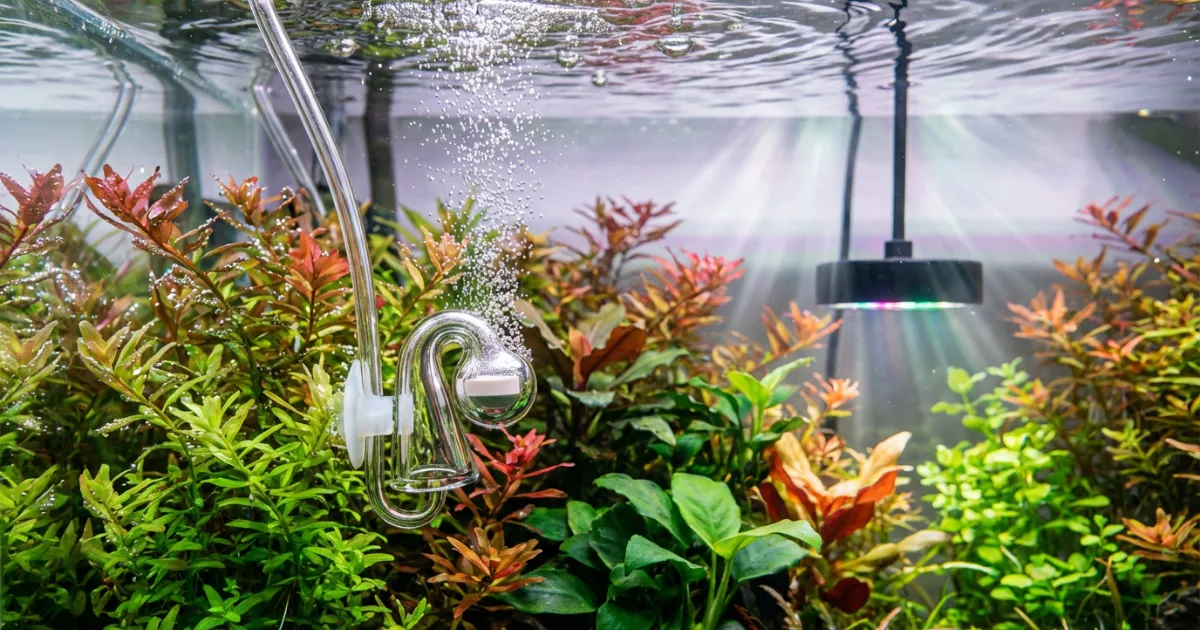
Cara kerja: CO2 dipaksa melewati ceramic disc berpori, menghasilkan micro bubbles yang naik ke surface.
| Aspek | Detail |
|---|---|
| Efficiency | 60-70% |
| Price | Rp 30-150k |
| Placement | Di dalam tank |
| Maintenance | Clean setiap 2-4 minggu |
| Best For | Budget setup, nano tank |
Kelebihan:
- Murah dan mudah didapat
- Easy to install dan replace
- Visual feedback (bisa lihat bubble)
- Works dengan DIY CO2
Kekurangan:
- Visible di tank (mengganggu aesthetic)
- Perlu cleaning regular (clog dengan algae/mineral)
- Efficiency lebih rendah (bubble escape ke surface)
- Noise dari bubble
Rekomendasi Produk:
- Budget: Generic ceramic (Rp 30-50k)
- Mid: Ista CO2 diffuser (Rp 60-80k)
- Premium: ADA Pollen Glass (Rp 150-300k)
2. Inline Diffuser
Cara kerja: Dipasang di tubing filter (setelah canister output). CO2 di-inject ke water flow, bubble dipecah oleh turbulence.
| Aspek | Detail |
|---|---|
| Efficiency | 80-90% |
| Price | Rp 100-400k |
| Placement | Di filter tubing (external) |
| Maintenance | Clean setiap 1-2 bulan |
| Best For | Canister filter users, clean aesthetic |
Kelebihan:
- Invisible (di luar tank)
- Higher efficiency (bubble terpecah lebih halus)
- Less noise
- Cleaner aesthetic
Kekurangan:
- Butuh canister filter (tidak work dengan HOB/internal)
- Slightly reduce filter flow
- Lebih mahal dari ceramic
- Harder to clean (di dalam tubing)
Rekomendasi Produk:
- Budget: Generic inline (Rp 100-150k)
- Mid: UP Aqua Inline (Rp 200-300k)
- Premium: GLA Inline (Rp 350-500k)
3. CO2 Reactor
Cara kerja: Chamber besar di mana CO2 dan air dicampur dengan turbulence, achieving near-100% dissolution sebelum masuk tank.
| Aspek | Detail |
|---|---|
| Efficiency | 95-100% |
| Price | Rp 200-800k |
| Placement | External (inline dengan filter) |
| Maintenance | Clean setiap 2-3 bulan |
| Best For | Large tanks, maximum efficiency |
Kelebihan:
- Highest efficiency (hampir 100% dissolution)
- No visible bubbles di tank
- Best untuk tank besar
- Long-term CO2 savings
Kekurangan:
- Paling mahal
- Bulky (butuh space)
- Reduce filter flow lebih dari inline
- Overkill untuk tank kecil
Rekomendasi Produk:
- Mid: Cerges Reactor (Rp 300-500k)
- Premium: GLA Atomic Reactor (Rp 600-900k)
Tabel Perbandingan
| Aspek | Ceramic | Inline | Reactor |
|---|---|---|---|
| Efficiency | 60-70% | 80-90% | 95-100% |
| Price | Rp 30-150k | Rp 100-400k | Rp 200-800k |
| Visibility | Visible | Hidden | Hidden |
| Noise | Some | Minimal | None |
| Filter Required | Any | Canister | Canister |
| Maintenance | Frequent | Moderate | Low |
| Best Tank Size | Di bawah 60cm | 45-90cm | 60cm+ |
| DIY CO2 Compatible | Yes | Difficult | No |
Efisiensi dan CO2 Savings
Cost Comparison (1 Tahun, Tank 60cm)
Scenario: 2kg tabung, refill Rp 50k
| Diffuser | Efficiency | Refills/Year | Annual Cost |
|---|---|---|---|
| Ceramic | 65% | 6x | Rp 300k |
| Inline | 85% | 4-5x | Rp 200-250k |
| Reactor | 98% | 3-4x | Rp 150-200k |
Savings dengan upgrade:
- Ceramic → Inline: Hemat Rp 50-100k/tahun
- Ceramic → Reactor: Hemat Rp 100-150k/tahun
Inline diffuser “pays for itself” dalam 1-2 tahun dari CO2 savings.
Cara Memilih Diffuser
Budget Setup / Nano Tank
Pilih: Ceramic diffuser
Alasan: Murah, adequate untuk tank kecil, works dengan DIY CO2.
Standard Setup (45-60cm) dengan Canister
Pilih: Inline diffuser
Alasan: Best balance efficiency dan cost. Clean aesthetic.
Large Tank (90cm+) atau Maximum Efficiency
Pilih: Reactor
Alasan: Highest efficiency, significant CO2 savings untuk tank besar.
HOB/Internal Filter User
Pilih: Ceramic diffuser
Alasan: Inline dan reactor butuh canister filter tubing.
Maintenance Diffuser
Ceramic Diffuser
Frequency: Setiap 2-4 minggu
Cara:
- Remove dari tank
- Soak dalam bleach solution (1:10) selama 30 menit
- Rinse thoroughly
- Soak dalam dechlorinated water
- Air dry sebelum pasang kembali
Signs perlu cleaning:
- Bubble size membesar
- Output menurun
- Visible algae/mineral buildup
Inline Diffuser
Frequency: Setiap 1-2 bulan
Cara:
- Disconnect dari tubing
- Disassemble jika possible
- Soak dalam bleach atau citric acid solution
- Rinse dan reassemble
Reactor
Frequency: Setiap 2-3 bulan
Cara:
- Disconnect dan drain
- Disassemble
- Clean internal components
- Check impeller jika ada
- Reassemble dan reconnect
Troubleshooting
Problem: Bubble Terlalu Besar
Penyebab: Diffuser clogged atau tekanan terlalu tinggi
Solusi:
- Clean diffuser
- Reduce working pressure
- Replace jika sudah tua
Problem: Tidak Ada Bubble
Penyebab: Blockage atau leak
Solusi:
- Check tubing untuk kink
- Check connections
- Verify CO2 flowing (bubble counter)
Problem: Bubble Hanya di Satu Sisi
Penyebab: Partial clog atau ceramic damage
Solusi:
- Deep clean dengan bleach
- Replace jika tidak improve
FAQ
Diffuser mana yang terbaik untuk pemula?
Ceramic diffuser — murah, easy to use, dan adequate untuk most setups. Upgrade ke inline setelah familiar dengan CO2 system.
Apakah inline diffuser worth it?
Ya, untuk canister filter users. Efficiency gain 15-25% significant untuk long-term savings. Plus aesthetic benefit (invisible).
Berapa sering harus ganti diffuser?
Ceramic: 6-12 bulan (tergantung maintenance). Inline/Reactor: 2-5 tahun dengan proper care.
Bisa pakai inline diffuser dengan DIY CO2?
Tidak recommended. DIY CO2 tekanannya rendah dan inconsistent — inline diffuser butuh tekanan stable dari pressurized system.
Kesimpulan
Diffuser choice significantly impacts CO2 efficiency dan long-term cost.
Quick recommendation:
- Budget/Nano: Ceramic diffuser
- Standard dengan canister: Inline diffuser
- Large tank/Max efficiency: Reactor
Key principle: Higher upfront cost = higher efficiency = lower long-term cost.
Untuk panduan CO2 lengkap, kembali ke CO2 System Aquascape. Untuk tuning BPS, baca Bubble per Second Guide.
Komentar
Memuat komentar...